
Report on results observed in the semi-pilot experiment from 2023
evaluating effect of the soil treated with soil adjuvant in the form of concentrated biological Azoter SC fertilizer (including fungal biocontrol agent Coniothyrium minitans) with a separate F additive (soil fungus Trichoderma atroviride) in the cultivation technology of winter oilseed rape
* * *
Ing. Tomáš Javor, DiS., Ing. Lenka Beranová, DiS. a kol., AGROEKO Žamberk spol. s r.o.
Josef Hamsa a kol., Zemědělské obchodní družstvo Habry
Characteristics of the experiment: Verification of Azoter SC biofertilizer in a dose of 10l/ha with separate F additive in a dose of 0,1 l/ha was applied to agrochemical deficient soils of the Bohemian- Moravian Highlands, Czech Republic (mainly soil pH and phosphorus availability), in cadastral territory of Frýdnava (Havlíčkův Brod district). On the experimental plots, there was a medium-heavy to lighter soil texture with a slight to moderate admixture of soil skeleton. The soil type is gleyic cambisol occurring on slope polygenetic clays with a transition to mesobasic (acidified) cambisol on gneisses and other solid rocks. The area is in a mildly warm and humid climate region. The average altitude of the experimental plots is 460 m above the sea level.
Sources of organic matter and soil pH adjustment: Spring barley was the pre-crop for winter oilseed rape. The straw of spring barley pre-crop with the yield of 5 t/ha was left for harvest on both plots. Subsequently, liming was carried out on the stubble with a dose of dolomitic limestone of 1.8 t/ha and stubble tillage was implemented. Before plowing, the digestate from the biogas station was applied in a dose of 18 t/ha (about 60 kg N/ha) on the plot No. 1606/1. On the adjacent trial plot No. 0705/7, pre-sowing application of digestate was omitted.
The soil on the plots before the trial was established (before the fertilizer application) showed a slightly acidic soil reaction (pH), low to very low content of available phosphorus (P), low content of mineral nitrogen Nmin, a satisfactory content of available calcium (Ca) and a very high organic matter content (Cox). Available potassium (K) content was good or very high. The content of available magnesium (Mg) was satisfactory or sufficient. The C : N ratio was wide, 17-21, due to the very high content of organic matter (tab.1).
| Plot (DPB No.) | Cox. (%) | Ntot. (mg/kg) | Nmin. (mg/kg) | pH/ CaCl2 | P | K | Ca | Mg |
| mg/kg of soil | ||||||||
| 0705/7 (digestate 0 t/ha) |
3,05 | 1744 | 6,53 | 6,2 | 32 | 430 | 1854 | 297 |
| Very high | – | Low | Slightly acidic | Low | Very high | Satisfactory | Sufficient | |
| 1606/1 (digestate 18 t/ha) | 3,19 | 1521 | 8,25 | 5,9 | 28 | 306 | 1731 | 187 |
| Very high | – | Low | Slightly acidic | Low | Sufficient | Satisfactory | Satisfactory | |
Tab. 1. Agrochemical properties of the soil on the plots before the application of fertilizers and tested Azoter SC + F biofertilizer (Frýdnava, 10. 8. 2022)
Azoter SC biofertilizer (containing non-symbiotic diazotrophic bacteria binding atmospheric nitrogen = N2: Azotobacter chroococcum, Azospirillum brasilense, bacteria involved in making phosphorus available in the soil: Bacillus megaterium and Sclerotinia spp. plant pathogenic fungus Coniothyrium minitans) was applied using a ground sprayer just before preparing the soil for sowing on 26 August 2021 in a dose of 10 l/ha together with addition in a dose of 0.1 l/ha. The dose of the spray was 300 l/ha. The addition of F component contains Trichoderma atroviride parasitic fungus, which restricts the development of fungal spores of the Fusarium genus (it also restricts Pythium, Rhizoctonia and Botrytis) and strengthens the effect of the fertilizer in the conversion of hemicelluloses and cellulose contained in post-harvest residues.
Results with pre-sowing Azoter SC+F application to the soil in winter oilseed rape stands:
-
The effect of Azoter SC + F biofertilizer on the agrochemical properties of the soil
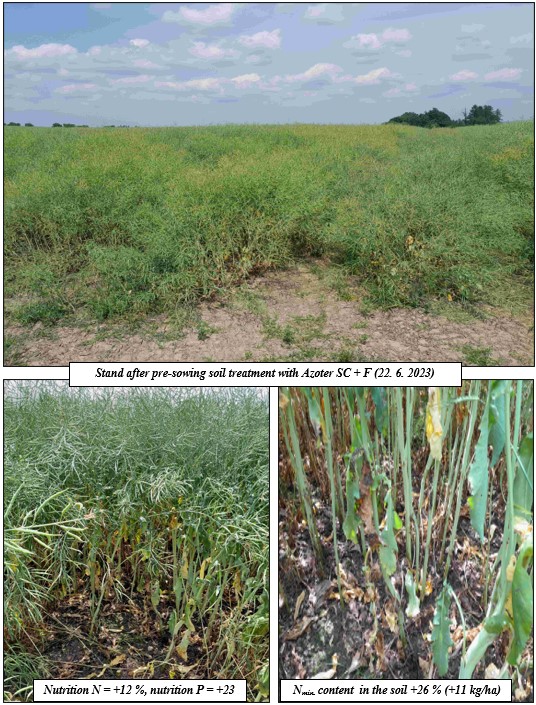
Before the harvest of the winter oilseed rape stands, the soil still showed medium reserves of mineral nitrogen (Nmin.) in the topsoil (42 – 57 kg/ha), of which 23 – 36 kg/ha was in mobile nitrate form (N-NO3–). After the soil was treated with Azoter SC + F, an increase in Nmin supply was found in the soil during the ripening of the stands both on the plot without and with the application of a pre-sowing dose of digestate of 18 t/ha. The results show that the alternative microbial source of nitrogen from atmospheric fixation (N2) by non-symbiotic diazotrophic bacteria contained in Azoter SC + F fertilizer was active and, apparently, the bacteria that was still vital in the soil almost a year after the application, distributed additional nitrogen to rapeseed plants until the very end of the intake. At the same time, it is evident that the transformation of nitrogen into preferentially acceptable nitrates (N-NO3–) by plants was proceeding very well in the soil. The subsequent growth of winter wheat stands after the rape crop had a better supply of nitrogen for autumn vegetation (Fig. 1).
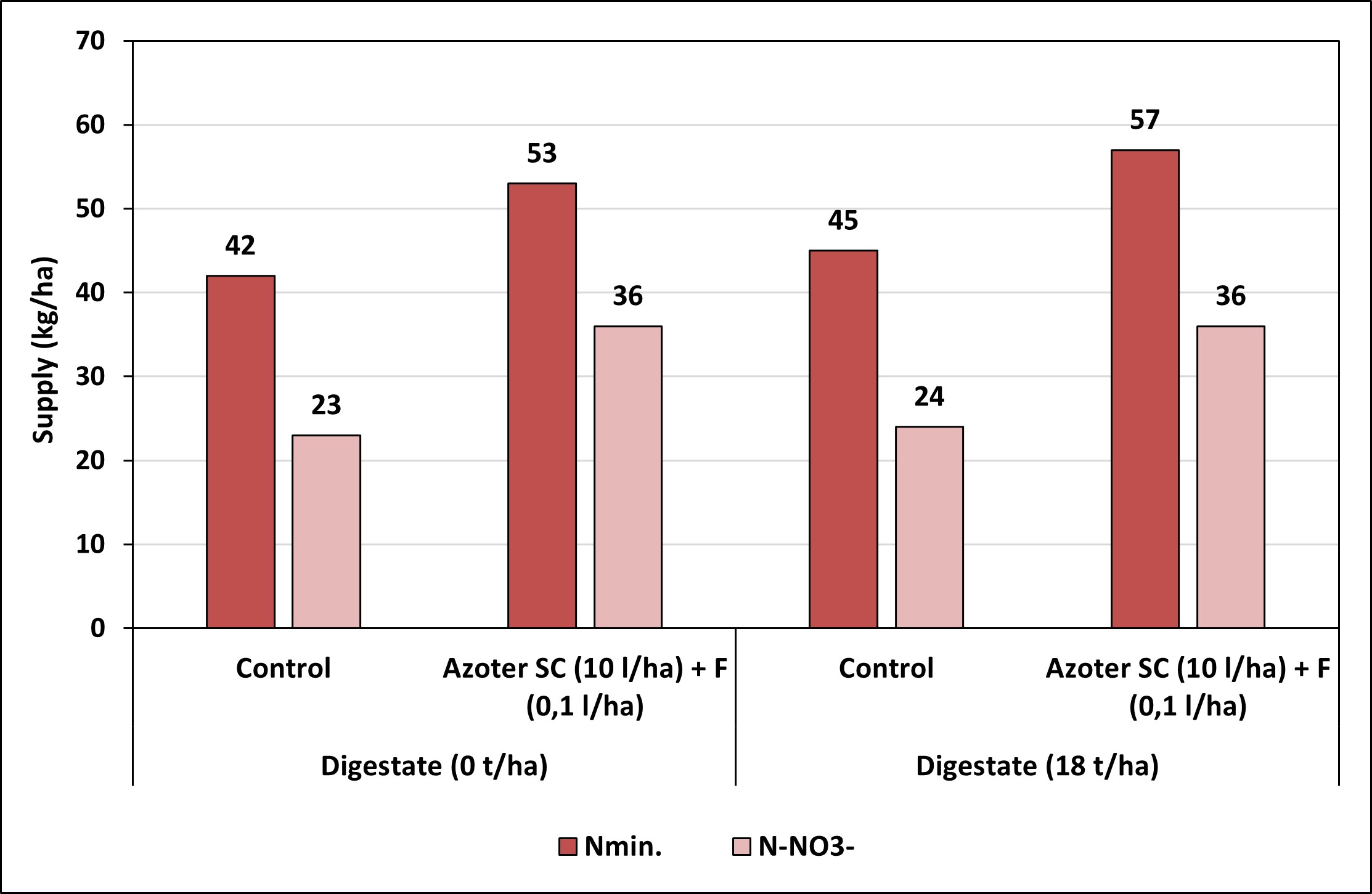
Fig. 1. The effect of Azoter SC+F biofertilizer application on the content of mineral nitrogen (Nmin.) and the proportion of nitrate nitrogen (N-NO3-) in the soil under the oilseed rape stands during ripening (topsoil, as of 1 July 2023)
2) The effect of Azoter SC+F biofertilizer on the vegetative phase and nutritional status of plants
Soil treatment with Azoter SC +F fertilizer supported the growth of above-ground biomass of winter oilseed rape plants. On the plot without pre-sowing application of digestate, a 29% increase in the dry mass of the above-ground biomass was found in the period after flowering. After the application of digestate before sowing and the subsequent application of Azoter SC + F fertilizer, an 18% increase in the dry weight of the above-ground biomass of the winter oilseed rape was found compared to the untreated control plot. Soil treatment with Azoter SC + F fertilizer fully improved the conditions for branching and growth of above-ground biomass (Fig. 2).
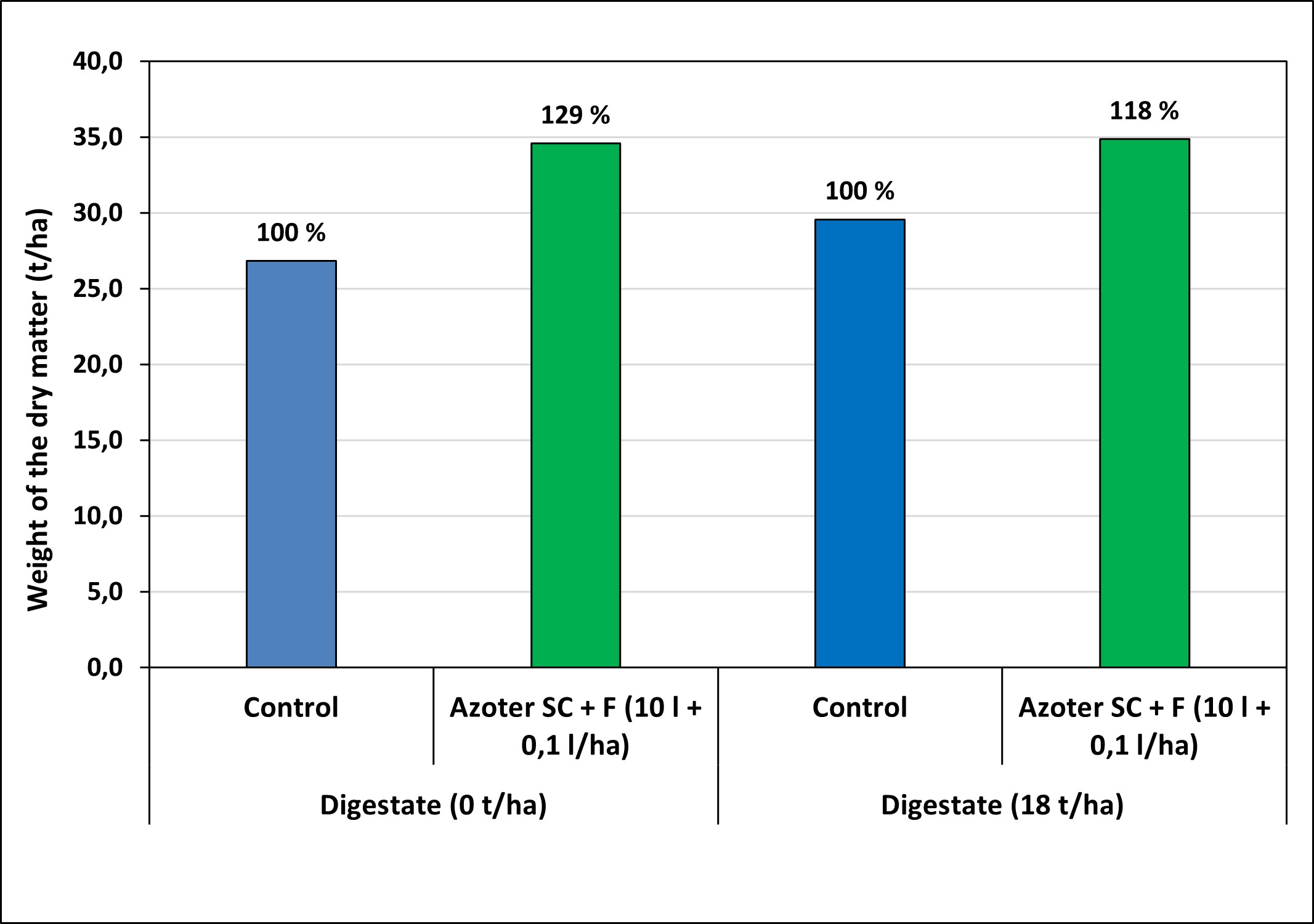
Fig. 2. The effect of Azoter SC+F biofertilizer application on the dry weight of the above-ground biomass of winter oilseed rape after flowering (as of 22 June 2023)
The nutritional status of winter oilseed rape after flowering showed better nitrogen (N) nutrition after pre-sowing soil treatment with Azoter SC + F fertilizer without and with the application of a pre-sowing dose of digestate. On the plot without the pre-sowing application of digestate, an improvement in plant nutrition with nitrogen by 12% of optimal nutrition fulfillment was found. After the pre-sowing application of the digestate and after the subsequent soil treatment with Azoter SC + F, an increase in the nutritional status of the plants by 12% was also found compared to the untreated control plot. Better plant nutrition with nitrogen was closely related to a higher increase in above-ground biomass and strengthening of the main branches of the stands. The stand after the pre-sowing application of digestate without Azoter SC + F soil treatment showed a medium to deep nitrogen deficit in plant nutrition in the period after flowering. In the other stands, plant nutrition was not in serious deficiency.
Plant nutrition with phosphorus (P) was significantly improved by 22% of optimal fulfillment after the soil on the plot was treated with Azoter SC + F without pre-sowing digestate application. Plant nutrition with phosphorus without pre-sowing soil treatment with Azoter SC + F fertilizer or without applying digestate before sowing was in a very deep deficiency, limiting the yield production. The other stands did not show such a serious deficiency in plant nutrition with phosphorus. Soil treatment with Azoter SC + F and pre-sowing fertilization with digestate did not result in better plant nutrition with phosphorus. Plant nutrition was comparable on both, the control plot and treated soil. Plant nutrition with potassium (K) was improved by only 1% after the soil treatment with Azoter SC + F. After simultaneous application of digestate before sowing, potassium nutrition was not improved. On the plot without applying a pre-sowing dose of digestate, plant nutrition with calcium (Ca) decreased by 4% of the optimal fulfillment after Azoter SC+F soil treatment. On the other hand, plant nutrition with calcium after the soil was treated with Azoter SC + F followed by a pre-sowing dose of digestate improved by 17% of the optimal fulfillment. On the plot without digestate application, plant nutrition with magnesium (Mg) after the soil treatment with Azoter SC + F decreased by 27% of the optimal fulfillment. After pre-sowing application of digestate, the decrease was by 9% of the optimal fulfillment. In both cases, the soil treatment with Azoter SC + F reduced magnesium plant nutrition. However, in all cases, even after the fertilizer treatment, the nutritional status of plants with magnesium after flowering was in high excess. Sulphur nutrition of plants after Azoter SC+F soil treatment was at the optimal level compared to the control plot. On the plot, after Azoter SC+F soil treatment followed by the application of digestate before sowing, the plant nutrition after flowering increased by 2% of the optimal fulfillment. Overall, in all cases, including Azoter SC+F soil treatment, plant nutrition with sulphur after flowering was at the optimum level (Fig. 3).
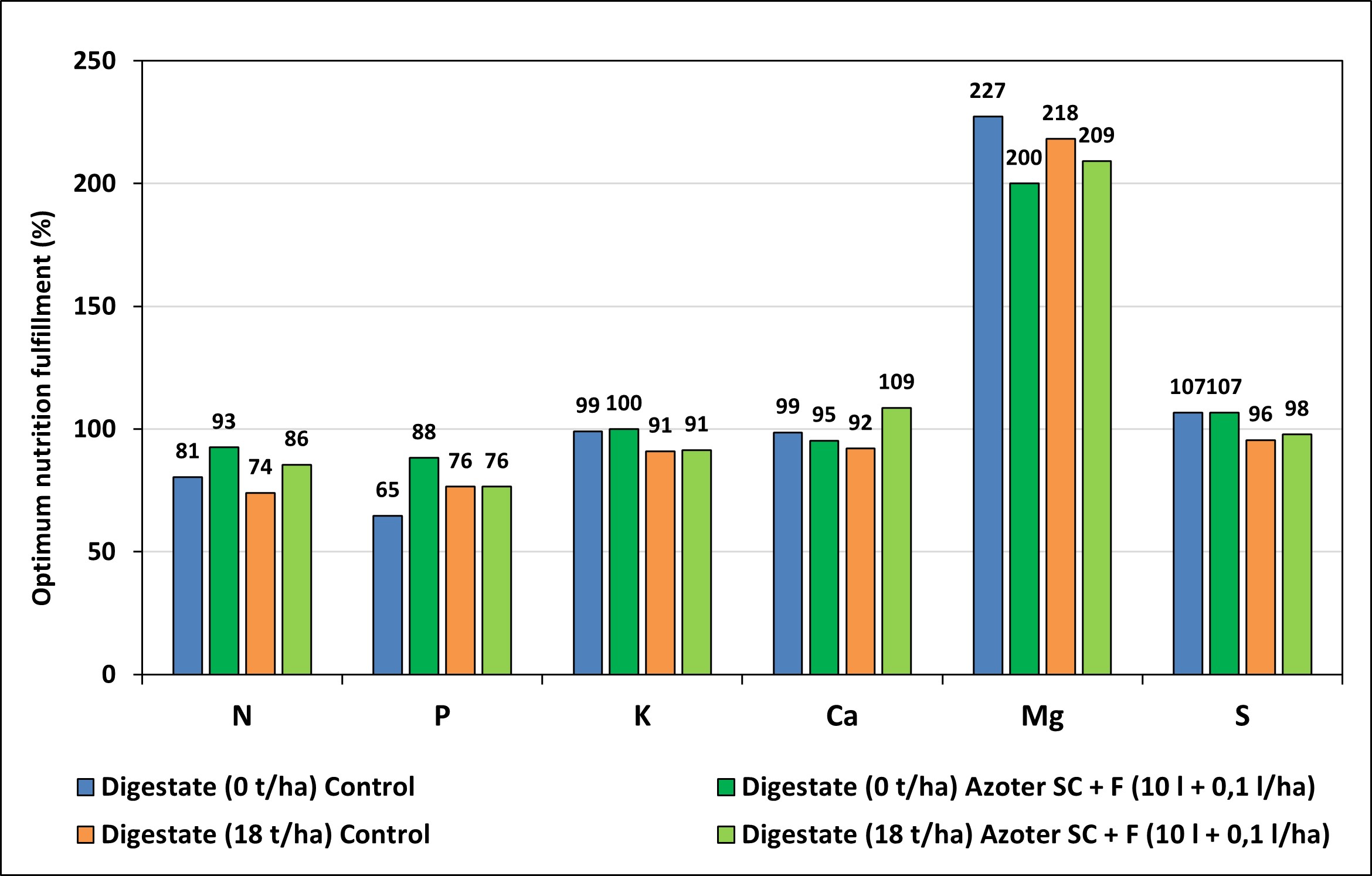
Fig. 3. Effect of the application of Azoter SC+F biofertilizer on the nutritional status of winter rapeseed plants after flowering (status as of 22 June 2023)
3) The effect of Azoter SC + F biofertilizer on the plant health
The stands of winter oilseed rape showed an attack of the stems by a complex of rots already after flowering. The stand on the control plot without the pre-sowing application of digestate and without applying Azoter SC+F fertilizer showed a ratio of 75% on average of the stems attacked by the rot complex. After the pre-sowing soil treatment with Azoter SC + F fertilizer, the plant infestation was by 60% lower. After the pre-seeding application of digestate, there were 50% of the infected stems on the stand. After the soil treatment with Azoter SC + F fertilizer and after the digestate application before sowing, 71% of stems were found to be infected. After flowering, it was evident that the highest proportion of healthy stems without any signs of plant infestation was found after the application of digestate before sowing without the soil treatment with Azoter SC + F fertilizer. It is possible that at this period after flowering, it was a case of secondary damage (infestation) of the stems due to (mealybugs) pests with subsequent developing infection with fungal pathogens (Fig. 4).
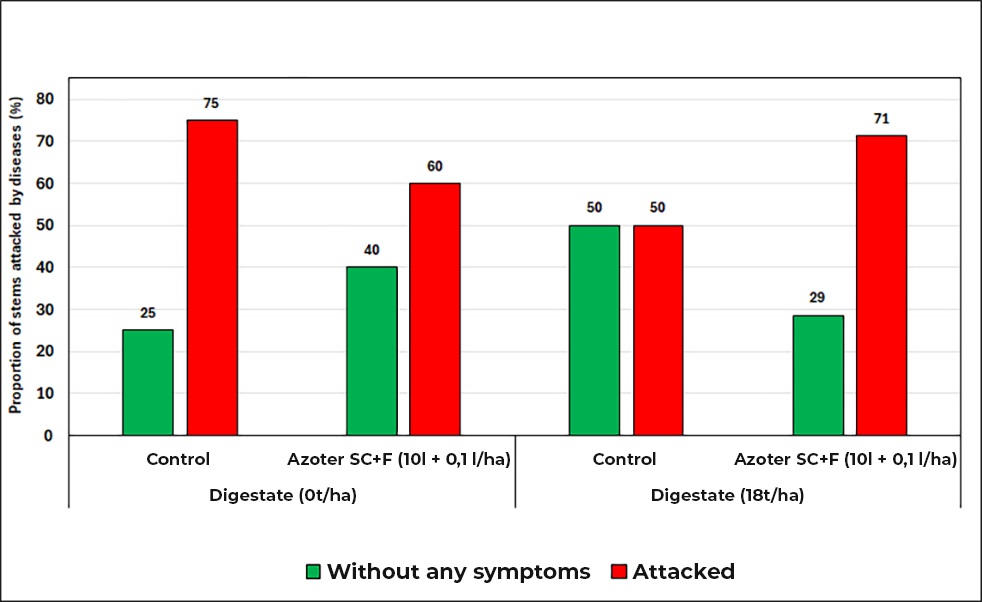
Fig. 4. Effect of Azoter SC+F application on the occurrence of plant stems symptomatically attacked by a complex of fungal diseases causing emergency ripening (state after flowering as of 22 June 2023)
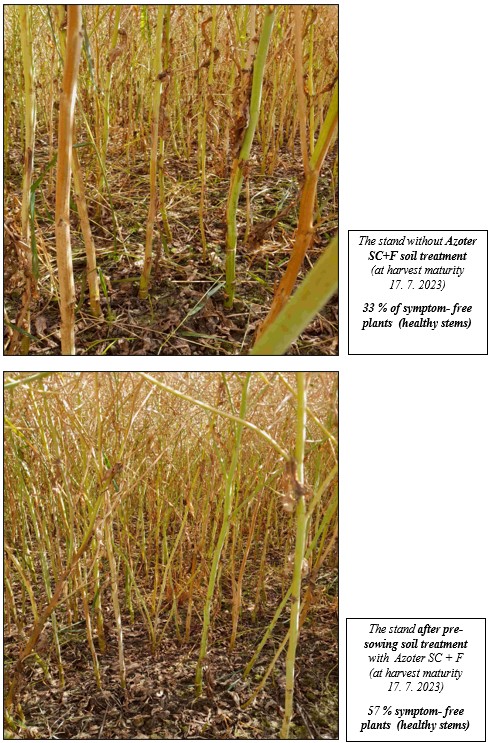
Before harvest, after the soil treatment with Azoter SC + F, the winter oilseed rape stands showed a lower proportion of intensively attacked stems by a complex of fungal diseases. On the plot without the digestate application and with the pre-sowing application of Azoter SC + F, the highest proportion (57%) of completely healthy symptom-free plants was found before harvest. The proportion of moderately attacked plants was 36% and the proportion of heavily attacked plants was only 7%. The stand on the control plot without pre-sowing soil treatment with Azoter SC + F fertilizer showed a 33% occurrence of symptom-free plants, 40% proportion of moderately infested plants and 27% proportion of severely infested rotting plants with emergency ripening.
After digestate application and the soil treatment with Azoter SC + F biofertilizer, an average of 49% of healthy, symptom-free plants were found in the stand at the time of harvest. The proportion of moderately attacked plants was 40% (on average) and the proportion of strongly attacked plants was 11%. On control plot without Azoter SC + F soil treatment, with remaining volume of pre-sowing digestate application, there were 46% of healthy plants without any symptoms of fungal diseases, 36% of moderately attacked plants and 18% of heavily attacked rotting plants with emergency ripening.
Soil treatment with Azoter SC + F biofertilizer increased the proportion of healthy, and moderately attacked plants (still acceptable) by a complex of fungal diseases. The increase without digestate application was by 20% and the increase with pre-sowing application of digestate was by 7% (Fig. 5).
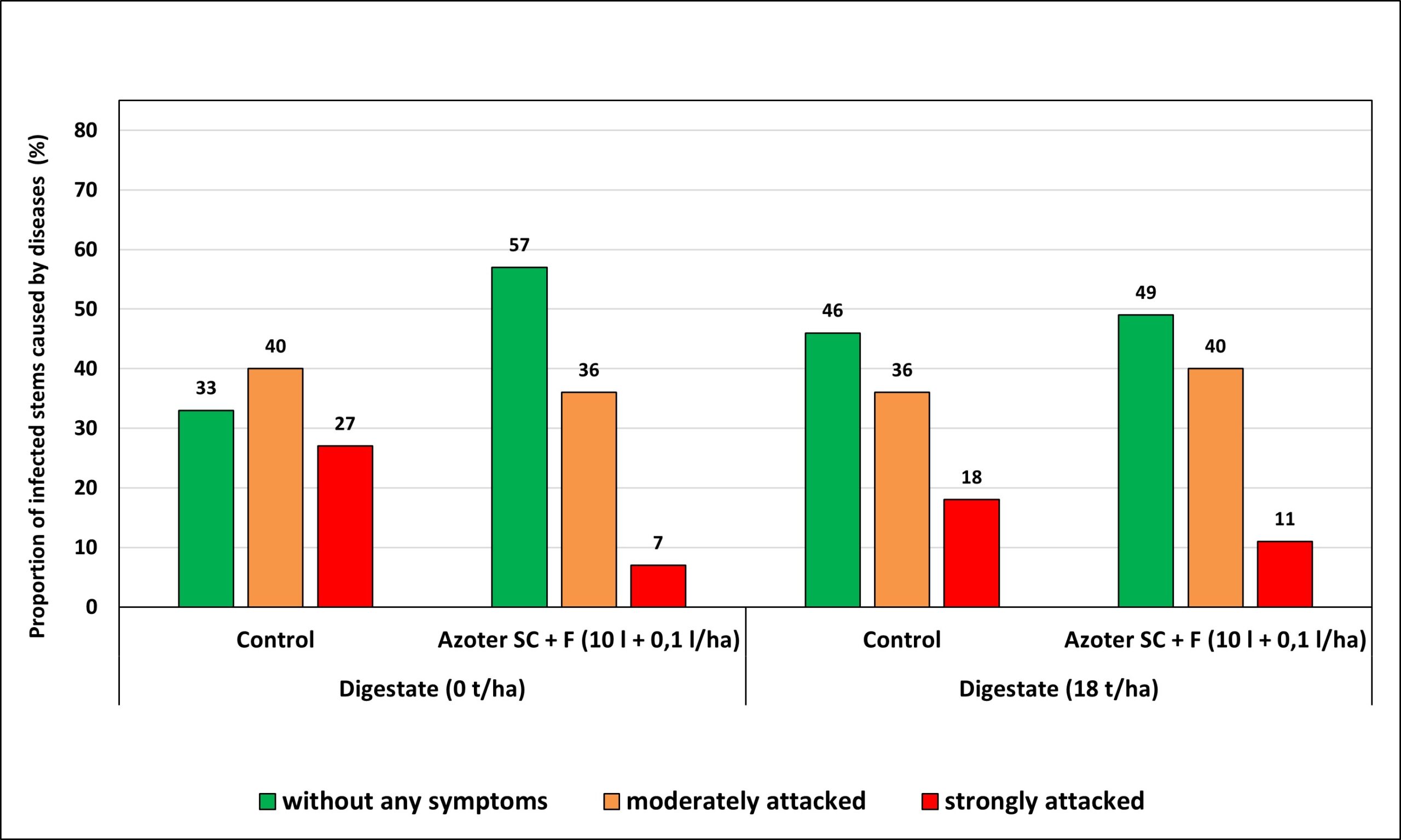
Fig. 5. The effect of Azoter SC+F biofertilizer application on the occurrence of symptomatically attacked plant stems by a complex of fungal diseases causing emergency ripening (pre-harvest stage as of 17 July 2023)
4) The effect of Azoter SC + F biofertilizer on yield and seed quality
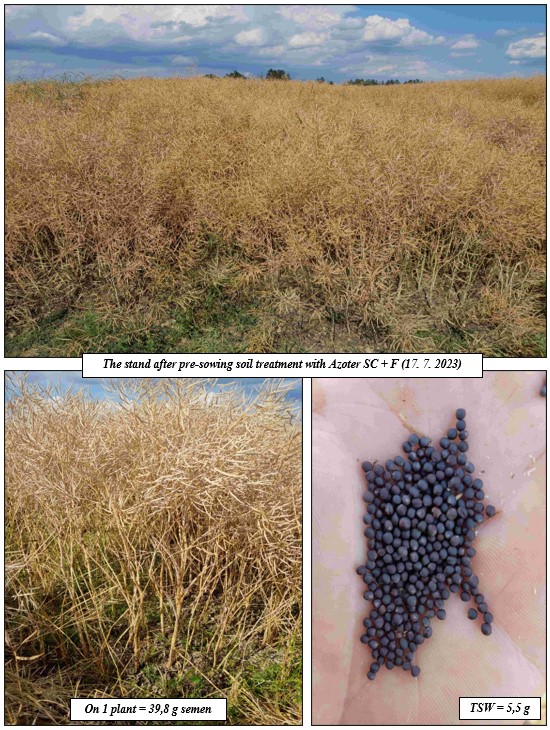
The complex of positive effect with Azoter SC + F soil treatment on plant nutrition with nitrogen, the stimulation of growth and branching of above-ground biomass, the reduction of plant stem infestation by fungal diseases increased the seed yield by 16%. In case of subsequent pre-sowing application of digestate, the increase was by 26% compared to untreated control variant. The stand on the plot without digestate application before sowing gave a seed yield of 3.29 t/ha on the control plot without Azoter SC+F treatment. After the soil treatment with Azoter SC + F biofertilizer, a seed yield of 3.82 t/ha was achieved, i.e. an increase of 0.53 t/ha.
A seed yield of 2.79 t/ha was achieved on the plot after the digestate application before sowing. After pre-sowing soil treatment with Azoter SC + F and the application of digestate before sowing, a seed yield of 3.51 t/ha was achieved. The increase in seed yield in the case of pre-sowing digestate application with Azoter SC + F was 0.72 t/ha (Fig. 6).
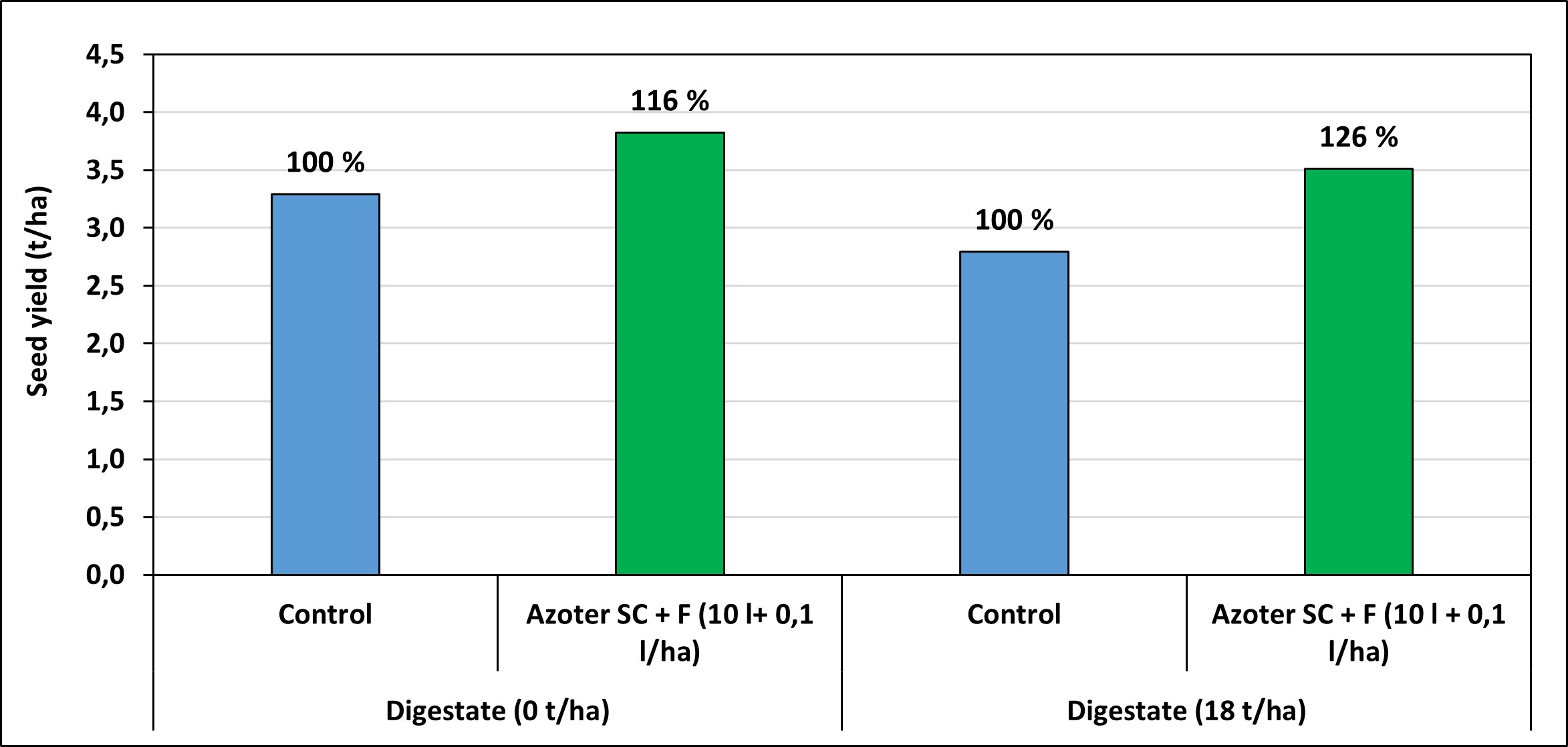
Fig. 6. Effect of Azoter SC+F biofertilizer on the achieved seed yield of winter oilseed rape at harvest (harvest on 12 August 2023)
After pre-sowing soil treatment with Azoter SC + F the stand of winter oilseed rape showed a significant increase in seed yield from the harvest samples after laboratory threshing. Adequately, the potential yield of straw was found. It increased by 3-28% after Azoter SC+F soil treatment, which contributed to the increase in grain yield in the samples by 11-30%. Subsequently, a 16-26% higher seed yield was achieved from the entire area of allocated land with the combine harvester. This also corresponded with a higher increase in the dry weight of the above-ground biomass of the stands already after flowering. That was due to a better nutritional state of the plants with nitrogen after the biological treatment of the soil before sowing.
On the plot without pre-sowing digestate application (digestate 0 t/ha), a significant improvement in plant nutrition with phosphorus was also found, which could be related to a significantly higher weight (size) of a thousand-kernel weight (TKW). The digestate application before sowing and the pre-sowing application of Azoter SC + F, on the other hand, contributed to an increase in plant seeding, i.e. a higher number of seeds on the plants. The density of the stands in the number of individual plants was very balanced between the stands after Azoter SC+F soil treatment and the control variant without treatment, in the range of 28-34 plants per m2. Treatment of the soil with Azoter SC + F without prior application of digestate resulted in a significant decrease in the oil content of the seeds. After digestate application before sowing and the Azoter SC + F biofertilizer, the oiliness of the seeds was completely comparable to the control variant without soil treatment (table 2).
| Pre-sowing fertilization | Variant | Weight | Seed yield potential (%) | TKW | No. of seeds | No. of plants | Oiliness | |
| Seed | Straw | g | ||||||
| g/m2 | pcs/plant | pcs/m2 | % | |||||
| Digestate 0 t/ha |
Control var. | 1001a | 2247a | 100a | 5,0a | 7802a | 30a | 44,2b |
| Azoter SC + F | 1113b | 2319a | 111b | 5,5b | 6674a | 28a | 40,5a | |
| Digestate 18 t/ha | Control var. | 632a | 1328a | 100a | 4,5a | 4897a | 30a | 42,6a |
| Azoter SC + F | 819b | 1701b | 130b | 4,4a | 5552b | 34a | 42,7a | |
Tab. 2. The effect of Azoter SC+F application on the seed yield-generating elements of winter oilseed rape and the potential of the achievable yield at harvest (as of 17 July 2023)
Note: Values marked with different letters (a, b) show statistically significant differences at the significance level of p<0.05 (Anova, LSD test).
Conclusions and economic evaluation:
In the region of Bohemian-Moravian Highlands, it was confirmed for the second year that the cultivation of the demanding winter oilseed rape crop should be intensified with the biological principles of plant nutrition:
(1) Winter oilseed rape stands after Azoter SC + F pre-sowing soil treatment showed a better nutritional state of plants with nitrogen in the second half of the growing season. On the plot without pre-sowing digestate application, the stands also showed significantly better phosphorus nutrition at the end of seed yield formation. Plants grown in pre-sowing treated soil showed an 18-29% higher increase in above-ground biomass.
(2) The pre-sowing Azoter SC+F application contributed to reduction of severe attack of plant stems by a complex of fungal diseases and the occurrence of rots and premature ripening. The incidence of heavily infested stems decreased by 9-20% after the soil treatment.
(3) The positive effect of pre-sowing soil treatment with Azoter SC + F at a dose of 10 + 0.1 l/ha showed a higher seed yield by 0.53 t/ha (by 16%) and after the subsequent application of digestate before sowing, the seed yield was higher by 0.72 t/ha (by 26%).
(4) Special pre-sowing treatment of the soil with the tested Azoter SC + F biofertilizer in a dose of 10 l + 0.1 l/ha using a field sprayer completely covered the additional costs incurred, including labor, and it significantly increased the profitability of the winter oilseed rape cultivation technology:
| Calculation (short version) | Untreated
*control var.* |
Treated
*Azoter SC + F* |
||
| Trial 1 | Trial 2 | Trial 1 | Trial 2 | |
| Market performance | ||||
| Seed yield (t/ha) | 3,29 | 2,79 | 3,82 | 3,51 |
| Valuation (CZK/t) | 10 000 | 10 000 | 10 000 | 10 000 |
| Sales (CZK/ha) | 32 900 | 27 900 | 38 200 | 35 100 |
| Variable costs (multiple costs of agricultural machinery) | ||||
| Azoter SC + F (Kč/ha) | 0 | 0 | 1 000 | 1 000 |
| Application (300 l water/ha) (CZK/ha) | 0 | 0 | 500 | 500 |
| Total (CZK/ha) | 0 | 0 | 1 500 | 1 500 |
| Contribution to cover other costs (Variable costs + Fixed costs ) | ||||
| Contribution (CZK/ha) | 32 900 | 27 900 | 36 700 | 33 600 |
| Contribution difference (CZK/ha) | x | x | 3 800 | 5 700 |
Note: Trial 1 = represents a plot without pre-sowing digestate application from Biogas station at a dose of 18 t/ha (60 kg N/ha).
Trial 2 = represents a plot with a pre-seeding digestate application from Biogas station at a dose of 18 t/ha (60 kg N/ha).
Exchange rate EUR/CZK on 23/10/2023 = 24,645 CZK/EUR
The results of the tested Azoter SC+F biological fertilizer was obtained in 2023, from the established operational trial in the implementing agricultural company. The results of the experiment were provided to the representative of the implementing company.
In Žamberk on 23 October 2023
Photo documentation from the semi-pilot experiment – location Frýdnava (Habry, o. HB, Czech Republic)